Letters · October 2026
Three things that change on the river in October
Slower fish, smaller bugs, and the gravel you shouldn't step on.
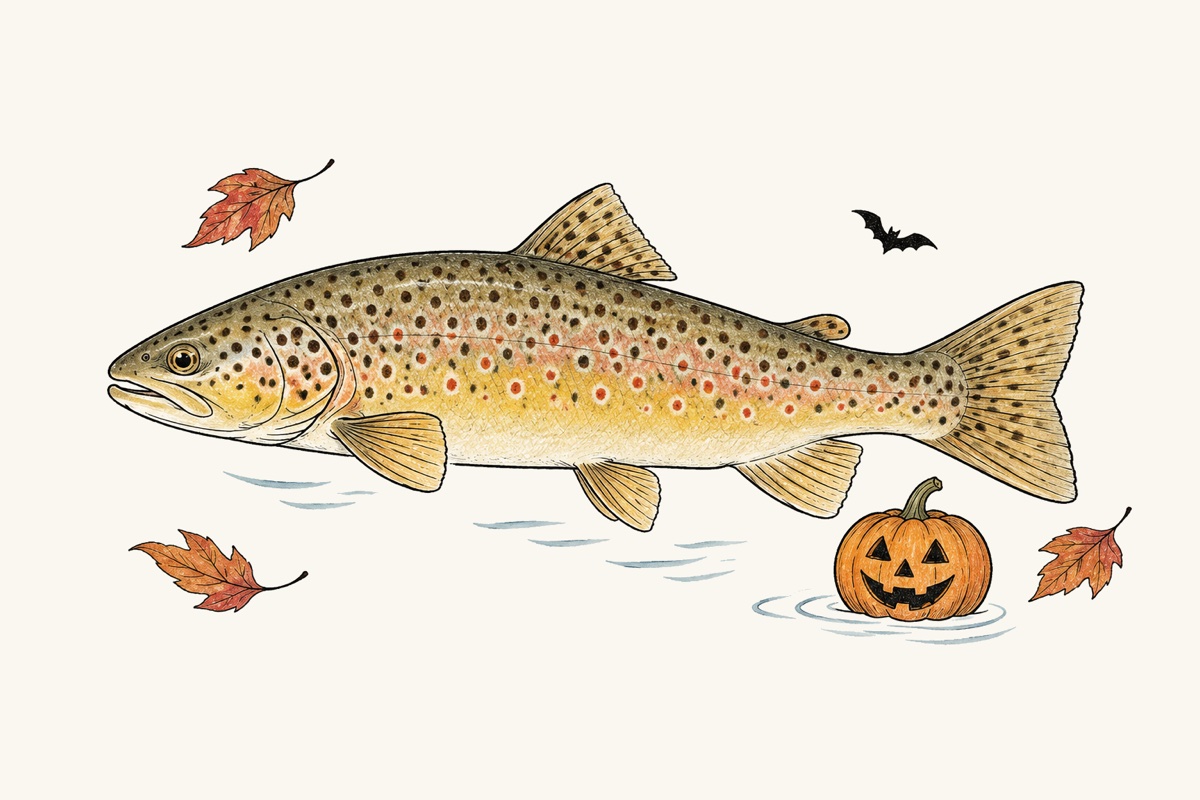
For a long time I fished October like it was July in a warmer jacket. Same flies, same fast water, same hopeful casting. The trout responded the way trout respond to most of my plans, which is by being somewhere else.
The river doesn't look much different in fall. It just runs on different rules. Here are three that matter, and what to do about each.
1. The fish get thrifty
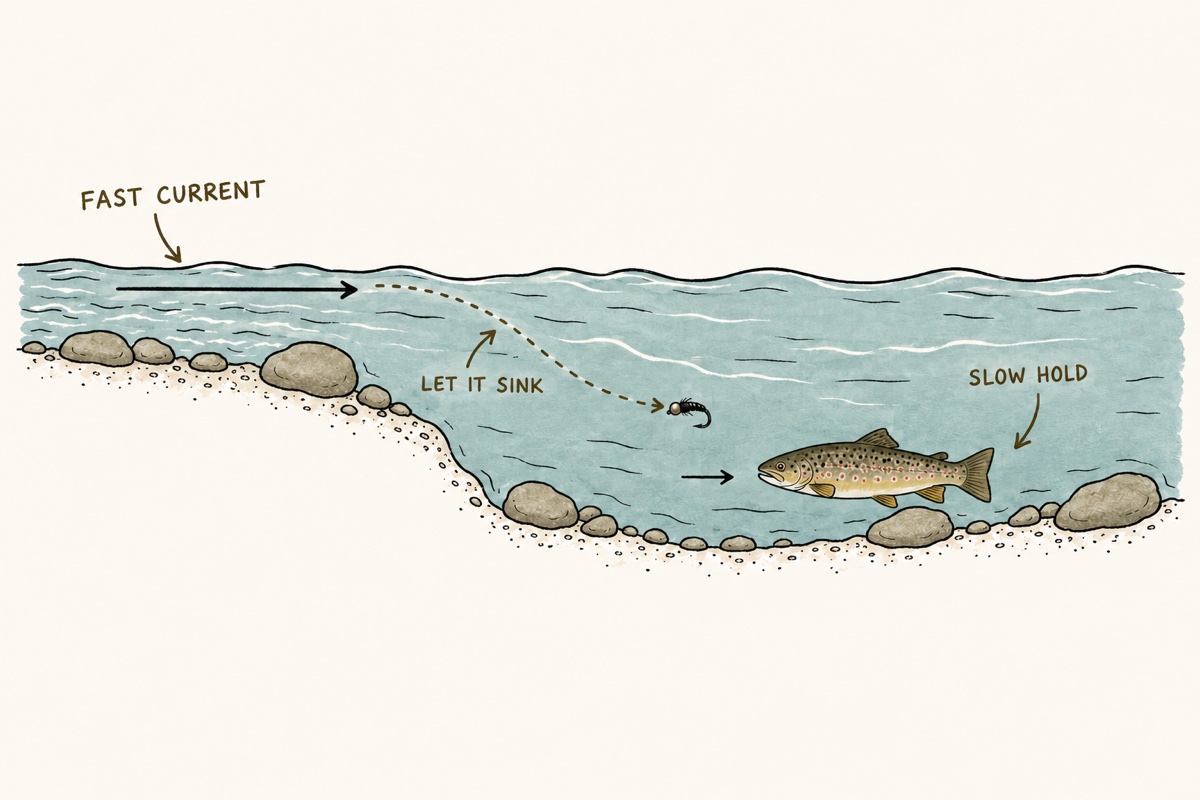
Fast current costs energy, and cold fish have less of it to spend. As the water cools, trout spend less time in the fast stuff and more in deep, slow pools, soft edges along the bank, and ledges where shallow water drops into deeper water.
So slow down with them. Let your fly get down to where they're holding. If a nymph isn't getting touched, add a little weight before you blame the fly. The fly is usually innocent.
Fall water is often low and clear, which turns a pool into a window. That works in both directions. Walk in from downstream, since trout face into the current, stay low, and fish the water closest to you before you step into it.
Fish slower than feels necessary. Then a little slower.
2. The bugs get small
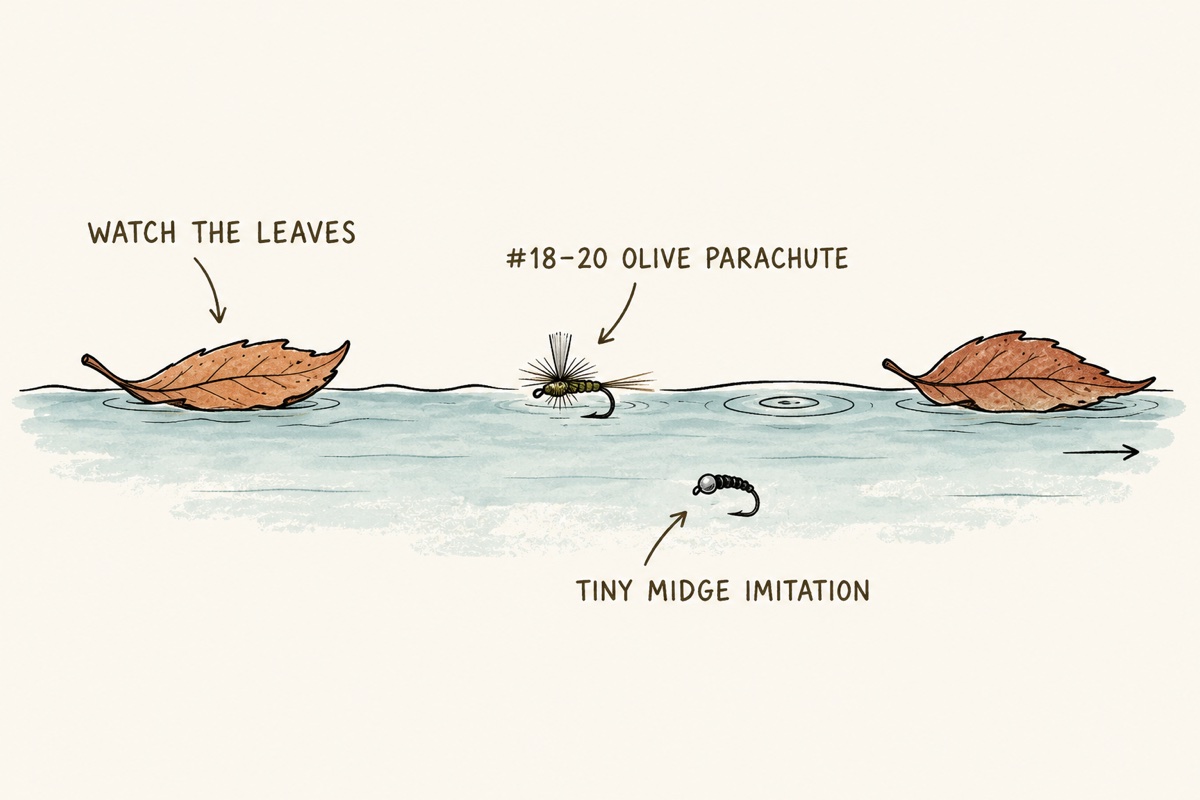
On a lot of rivers, the hoppers fade once the frosts come. What's left is smaller: little olive mayflies, often called Blue-Winged Olives, and tiny midges under the surface.
If you see small, quiet rises and can't tell what they're eating, size down. A #18 or #20 olive parachute is a good place to start. Bigger hook number, smaller fly. You'll tie one on, look away for a second, and lose it on the water. That's what the post is for.
Two more October things:
- Gray days are worth going out for. A lot of anglers save cool, overcast afternoons for olive hatches. A little drizzle is not a reason to stay home. It might be the reason to go.
- Watch the leaves. They drift down the same lanes your fly does. Check your hook every few drifts. A fly with a leaf on it is a very convincing leaf.
Small flies feel fussy at first. Mostly they just ask you to pay attention.
3. The gravel matters
This is the one I'd most like you to remember.
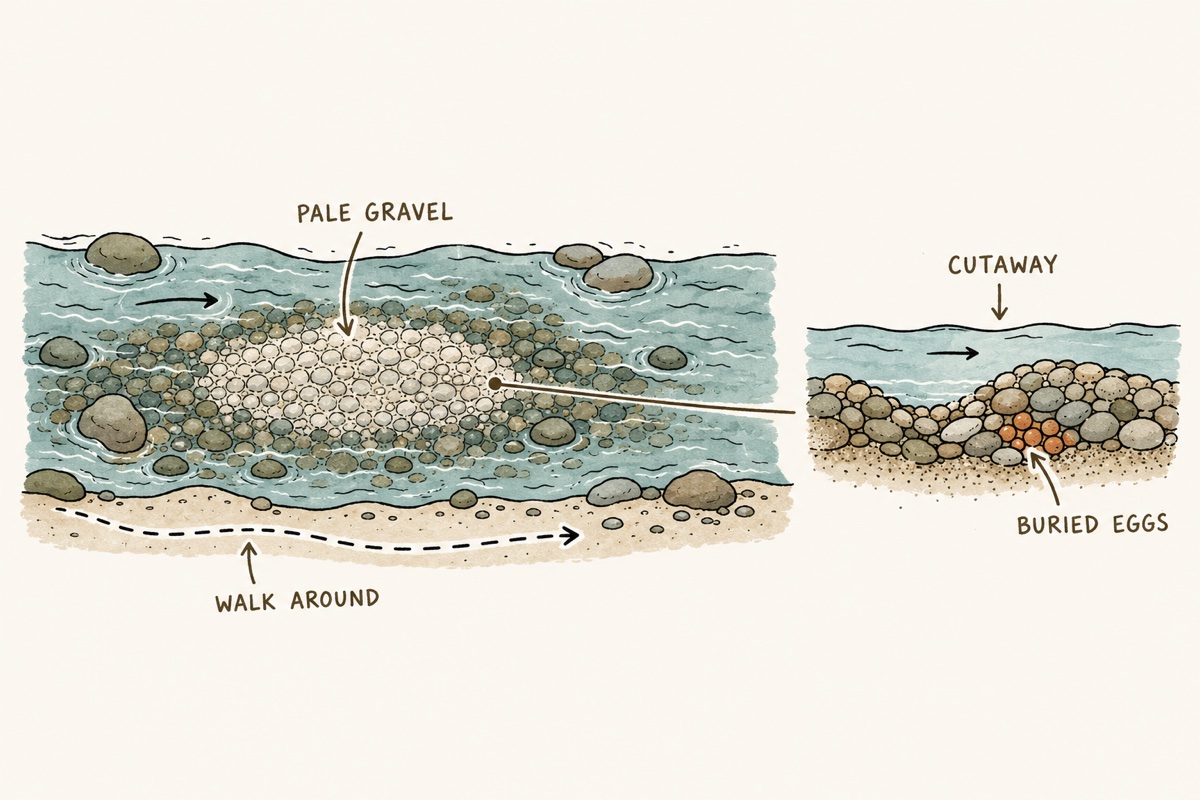
Brown trout and brook trout spawn in fall. The female digs a nest in the gravel, called a redd, lays her eggs, and buries them. Timing varies a lot from stream to stream. So if your water has browns or brookies and a gravel bottom, assume it could be happening this month. (Rainbows and cutthroat mostly spawn in spring, so this is mainly a fall-trout thing.)
A redd doesn't look like much, which is the problem. It's a clean, oval patch of gravel that looks paler than the gravel around it, usually in shallow water: tailouts, riffles, and glides.
Here's what to do when you see one:
- Don't step on it. The eggs are buried in the low mound on the downstream end, and wading on a redd can crush them.
- Don't trust an empty one. The eggs, and then the newly hatched fry, stay in the gravel until spring, long after the adults leave.
- Don't stand just upstream of one, either. The silt you kick up washes down and can smother the eggs.
- Leave fish on the gravel alone. They're likely spawning. Go fish the pools, runs, and pocket water instead.
- Check your regulations. Some waters close or change rules during the spawn.
Walk around on darker gravel or along the bank. Every egg in that pale little oval is a trout that hasn't happened yet.
This week: Fish slow, size down, and look down before you step in.
Hit reply and tell me what your October river is doing. Have you spotted a redd yet? I read every one.
Know where to look before you get there
All three of those changes come back to one question: where are the fish right now?
I wrote Where Trout Hide to answer that question, because nobody answered it for me. It's a 29-page illustrated PDF on the seven places trout hold. For each one, it shows you how to recognize it, where the trout usually sits, where your first cast should go, and the mistake that ruins it.
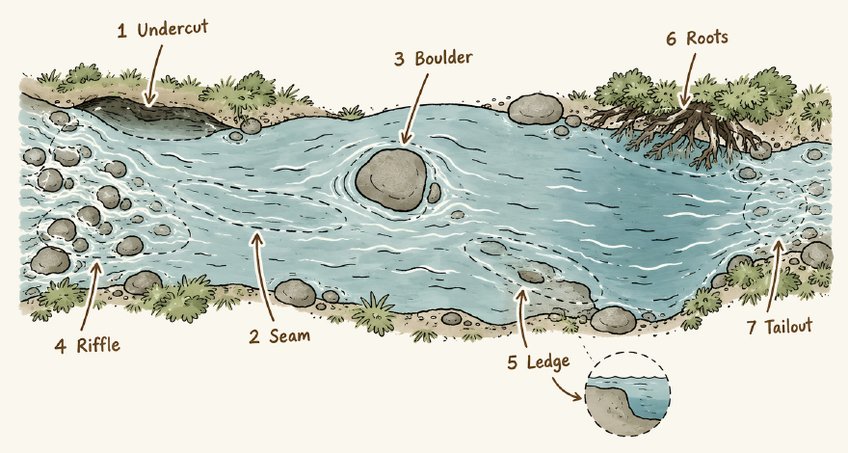
A few pages earn their keep in October:
- The quick conditions guide, including where to look in cold water and in low, clear water.
- Tailouts, with the note on redds, so you know what you're stepping into.
- The 10-second pause and a search order, so you stop casting everywhere and start casting somewhere.
- A one-page Before You Cast checklist to keep on your phone for the walk in.
It's $8.99. Checkout runs through Stripe, and the download shows up as soon as you pay.
It won't put fish in the river. It'll help you find the ones already there.
Tight lines,
Fly Fishing Illustrated
PS. The river changes in October. The trout still want food, shelter, and an easy place to rest. Where Trout Hide shows you where those overlap: 29 illustrated pages for $8.99 at flyfishingillustrated.com/shop.